Pet-care OEM insights
Pet Dental Health: Why Oral Care Sprays Are the Fastest-Growing B2B Opportunity in Pet Oral Care
OEM guide to pet oral care sprays: chlorhexidine formulations, xylitol-free safety, channel strategy, and private-label manufacturing criteria for brand owners.
There is a moment every pet owner knows: you lean in to give your dog a cuddle, and the smell stops you cold. Bad breath in pets is not just an inconvenience — it is the most visible symptom of a silent epidemic in companion animal health. According to the American Veterinary Dental College, over 80% of dogs and 70% of cats show signs of periodontal disease by age three. Yet the majority of pet owners still have no daily oral care routine for their animals.
This is the market gap that smart brand owners, veterinary distributors, and specialty pet retailers are moving to fill. And within the oral care category, oral care sprays represent the fastest-growing product format — because they solve the compliance problem that has always undermined pet dental health: most pets will not tolerate brushing.
This guide is written for B2B buyers evaluating OEM oral care spray formulations. We cover the clinical science behind the format, the active ingredient architecture that separates a premium spray from a generic breath freshener, the regulatory landscape, and the product portfolio strategy that maximizes your brand's position in this high-growth category.
Why Oral Care Sprays Are Outpacing Traditional Pet Dental Products
The pet oral care market has historically been dominated by toothpastes and dental chews — products that require either active participation from the pet (chewing) or significant effort from the owner (brushing). Both formats have a fundamental compliance problem. Studies show that fewer than 5% of dog owners brush their pet's teeth daily, despite veterinary recommendations. The most common reason cited: the pet resists.
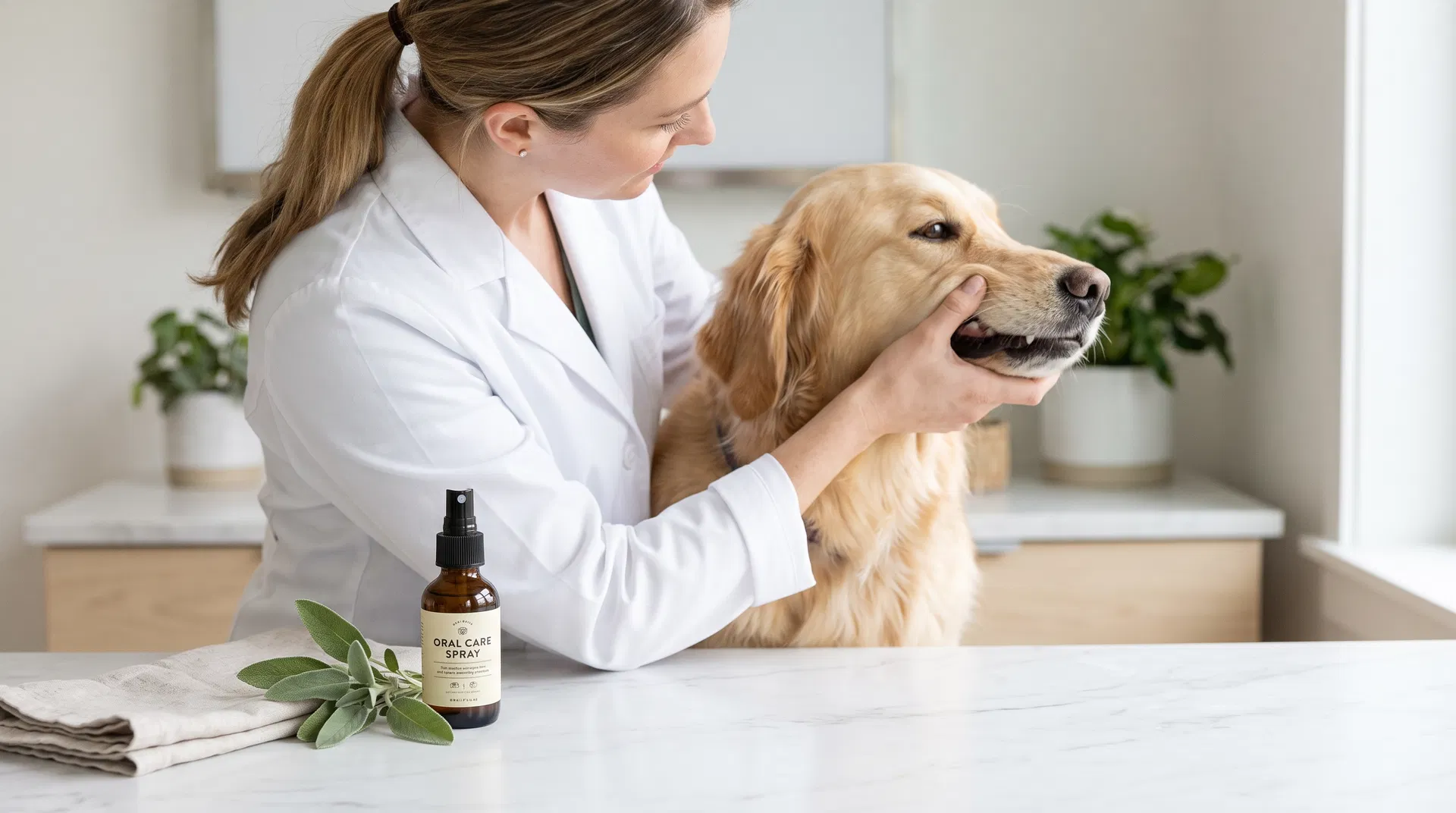
Oral care sprays eliminate this barrier entirely. A two-second application directly into the oral cavity requires no brushing, no chewing, and minimal restraint. For multi-pet households, elderly pets with joint pain that makes chewing uncomfortable, or cats — who are notoriously resistant to any form of oral manipulation — sprays are often the only format that owners will actually use consistently.
This compliance advantage translates directly into commercial performance. A product that owners use daily generates daily repurchase cycles. A dental chew that sits in a drawer because the dog won't eat it generates returns. For brand owners building a pet oral care line, the spray format is not just a product choice — it is a customer retention strategy.
The global pet oral care market is projected to grow at a CAGR of approximately 7.2% through 2030, with spray formats capturing an increasing share of that growth as consumer awareness of the compliance advantage spreads through veterinary recommendation channels and social media pet care communities.
The Science of Periodontal Disease: Why the Problem Is Bigger Than Bad Breath
Bad breath — halitosis — is the symptom that brings pet owners to the oral care aisle. But the underlying condition that causes it, periodontal disease, is a systemic health threat that extends far beyond the mouth.
Periodontal disease begins with the accumulation of dental plaque — a biofilm of bacteria, food particles, and salivary proteins that adheres to tooth surfaces. Within 24–48 hours of formation, plaque begins to mineralize into tartar (calculus), which cannot be removed by topical products alone and requires professional scaling. As the bacterial biofilm matures, it triggers an inflammatory response in the gingival tissue. This inflammation — gingivitis — progresses to periodontitis if untreated, causing irreversible destruction of the periodontal ligament and alveolar bone that support the teeth.
The systemic consequences are increasingly well-documented. The oral cavity is a gateway to the bloodstream, and the bacteria associated with periodontal disease — particularly Porphyromonas and Treponema species — have been linked to endocarditis, nephritis, and hepatitis in dogs and cats. A 2019 study published in Veterinary Evidence found that dogs with severe periodontal disease had a significantly higher incidence of cardiac abnormalities compared to dogs with healthy oral cavities.
This systemic dimension is a powerful B2B selling point. When your brand positions an oral care spray not just as a breath freshener but as a preventive health product that protects the heart, kidneys, and liver, you move from the grooming aisle into the veterinary health category — a positioning that commands premium pricing and veterinary endorsement.
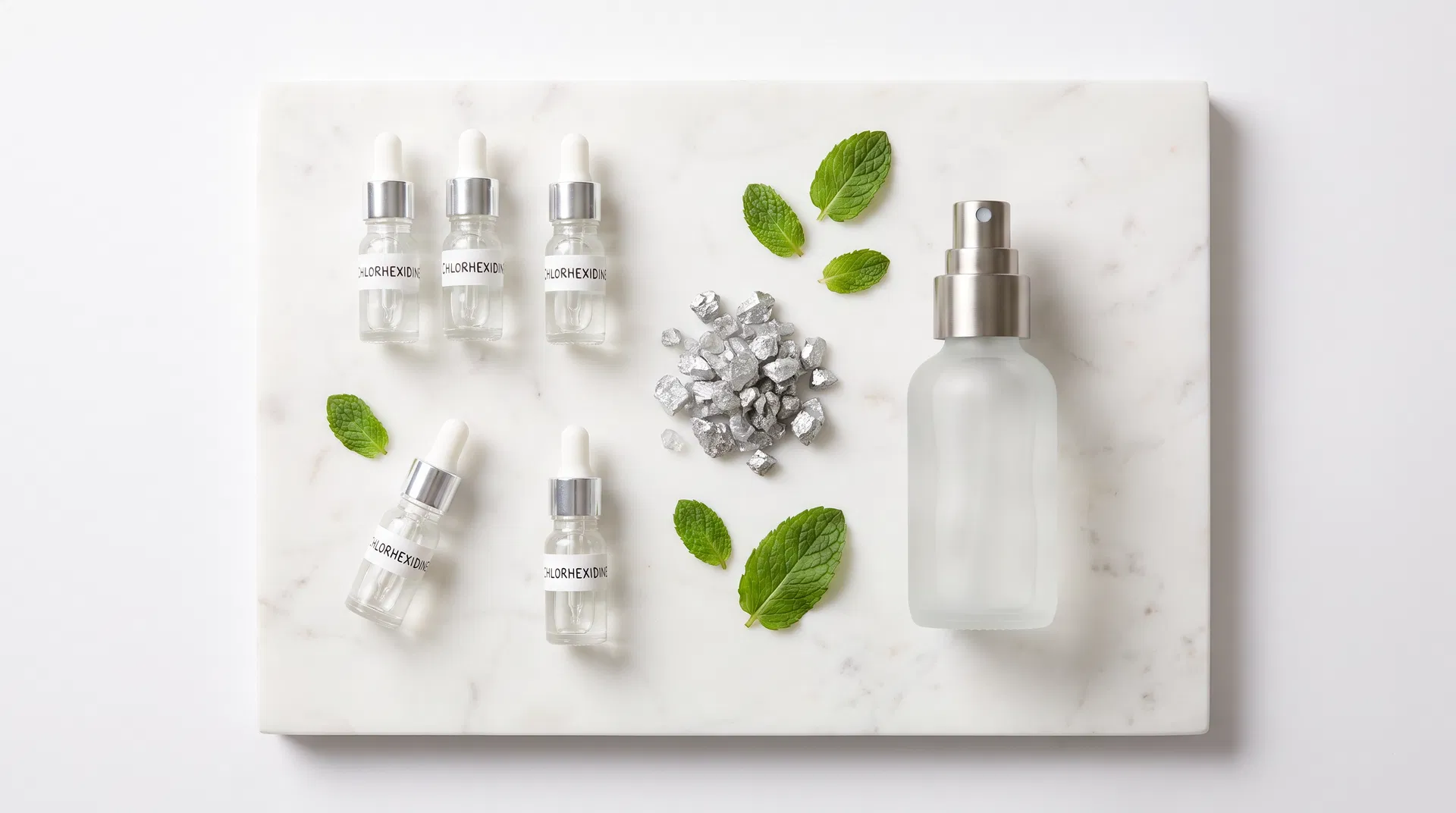
Active Ingredient Architecture: What Makes a Premium Oral Care Spray
The active ingredient profile of an oral care spray determines its clinical credibility and its ability to generate the repeat-purchase behavior that drives brand loyalty. A premium formulation addresses three distinct mechanisms simultaneously: antimicrobial action, plaque inhibition, and odor neutralization.
Chlorhexidine: The Gold Standard Antimicrobial
Chlorhexidine gluconate is the most extensively studied antimicrobial agent in veterinary dentistry. At concentrations of 0.12–0.2%, it provides broad-spectrum bactericidal activity against the gram-positive and gram-negative organisms responsible for periodontal disease, with a substantivity effect — it binds to oral tissues and continues releasing antimicrobial activity for 8–12 hours after application.
The clinical evidence for chlorhexidine in veterinary oral care is robust. Multiple controlled trials have demonstrated significant reductions in plaque accumulation, gingivitis scores, and bacterial counts in dogs and cats using chlorhexidine-based oral rinses and sprays compared to placebo controls. It is the active ingredient that gives a formulation genuine clinical credibility — not just marketing claims.
Our Fresh Breath Oral Spray is formulated with Chlorhexidine 0.12% — the clinically validated concentration for veterinary oral care — combined with Peppermint Oil and Zinc Gluconate for a complete antimicrobial and odor-control system.
Zinc Gluconate: Plaque Inhibition and Odor Control
Zinc ions exert their oral health benefits through two distinct mechanisms. First, zinc inhibits the growth of volatile sulfur compound (VSC)-producing bacteria — the organisms directly responsible for the sulfurous, fecal odor characteristic of severe halitosis. Second, zinc ions interfere with the mineralization of plaque into tartar by chelating calcium ions that are required for calculus formation.
The combination of chlorhexidine and zinc gluconate creates a synergistic antimicrobial and anti-calculus system that addresses both the bacterial cause of periodontal disease and its most commercially visible symptom — bad breath. This synergy is the formulation principle behind our Fresh Breath Oral Spray.
Peppermint Oil: Sensory Experience and Secondary Antimicrobial Activity
Peppermint oil serves a dual function in premium oral care spray formulations. Its primary commercial role is sensory: the immediate cooling, freshening sensation provides owners with tangible, real-time feedback that the product is working — a critical factor in building the daily use habit that drives repurchase. Owners who can smell and feel the difference after application are far more likely to use the product consistently.
Beyond the sensory dimension, peppermint oil contains menthol and carvacrol — compounds with documented antimicrobial activity against oral pathogens including Streptococcus mutans and Porphyromonas gingivalis. At the concentrations used in oral care formulations (typically 0.1–0.5%), peppermint oil contributes meaningfully to the overall antimicrobial efficacy of the formula.
Xylitol-Free Formulation: A Non-Negotiable Safety Requirement
Xylitol — a sugar alcohol used in human oral care products for its anti-cariogenic properties — is acutely toxic to dogs. Even small doses can cause life-threatening hypoglycemia and hepatic necrosis in canines. Despite this well-established toxicology, xylitol continues to appear in some pet oral care products, either through formulation error or because a human oral care formula has been repurposed for pets without adequate safety review.
A xylitol-free formulation is not a differentiating feature — it is a baseline safety requirement. Any OEM manufacturer that cannot confirm xylitol-free status across their entire oral care range should be disqualified from consideration. Our Fresh Breath Oral Spray is explicitly formulated xylitol-free, with full ingredient transparency available to all brand partners.
Building a Complete Oral Care Portfolio: The Three-Product Architecture
The most commercially successful pet oral care brands are not built around a single product — they are built around a three-tier portfolio that addresses different owner preferences, different pet compliance profiles, and different price points within the same brand family.
| Tier | Product Format | Key Actives | Ideal For | Repurchase Cycle |
|---|---|---|---|---|
| Daily Maintenance | Oral Care Spray | Chlorhexidine 0.12%, Zinc Gluconate, Peppermint Oil | All pets, especially resistant ones | Monthly |
| Passive Prevention | Water Additive / Mouthwash | Sodium Hexametaphosphate, Zinc Sulfate, Chlorhexidine | Multi-pet households, low-effort owners | Monthly |
| Active Cleaning | Enzymatic Dental Gel | Glucose Oxidase, Lactoperoxidase, Zinc Citrate | Cooperative pets, veterinary recommendation | Monthly |
This three-product architecture serves a critical commercial function: it captures every segment of the oral care market within a single brand family. The owner who cannot brush their pet's teeth buys the spray. The owner who wants a completely hands-off solution adds the Dental Water Additive & Mouthwash to the drinking bowl. The owner whose pet tolerates brushing — or the veterinary clinic selling professional-grade home care — reaches for the Enzymatic Dental Gel Toothpaste.
When a brand owns all three tiers, it captures the full customer lifetime value of the oral care category rather than competing for a single SKU sale.
Spray Formulation Formats: Choosing the Right Delivery System
Not all oral care sprays are formulated equally, and the delivery system — the physical format of the product — has a significant impact on both clinical efficacy and consumer experience.
Aqueous sprays are the most common format: water-based solutions delivered through a fine-mist pump. They provide excellent coverage of oral surfaces, rapid active ingredient delivery, and easy rinsing by the pet's natural saliva flow. The limitation is shelf stability — aqueous formulations require robust preservative systems to maintain microbial safety throughout the product's shelf life.
Gel-based sprays use a viscous gel carrier that adheres to tooth and gum surfaces longer than aqueous solutions, extending the contact time of active ingredients. This extended substantivity is particularly valuable for chlorhexidine, which achieves its maximum antimicrobial effect through prolonged tissue contact. The trade-off is a slightly more complex application experience — some pets find the gel texture less palatable than a fine mist.
Oil-based sprays — typically using medium-chain triglycerides (MCT oil) as the carrier — are gaining traction in the premium natural pet care segment. MCT oil has documented antimicrobial properties against oral pathogens and provides a lipid-rich environment that supports the oral mucosal barrier. For brands positioning in the "natural" or "clean label" space, an MCT-based oral spray with essential oil actives (peppermint, clove, oregano) offers a compelling alternative to conventional chlorhexidine formulations.
Channel Strategy: Where Oral Care Sprays Win
Oral care sprays have a distinct channel advantage over other pet dental products: they are highly demonstrable in retail environments and generate strong word-of-mouth through veterinary recommendation channels.
In veterinary clinic distribution, oral care sprays benefit from the "veterinary recommendation halo" — products endorsed by a veterinarian are perceived by owners as clinically validated, regardless of their regulatory classification. Veterinary clinics that stock oral care sprays as part of a dental health protocol generate consistent reorder volumes because owners return for professional cleaning appointments and repurchase the home care products at the same time.
In specialty pet retail, oral care sprays benefit from their visual simplicity and ease of demonstration. A staff member can demonstrate the application in ten seconds on a store display dog, and the immediate freshening effect provides instant sensory validation. This demonstrability drives impulse purchase and trial conversion at a rate that dental chews and toothpastes cannot match.
In e-commerce, oral care sprays benefit from their subscription-friendly repurchase cycle. A 60ml spray used daily lasts approximately 30–45 days — a natural subscription cadence that Amazon Subscribe & Save and DTC subscription programs are built to capture. For brand owners building a DTC channel, oral care sprays are among the highest-LTV SKUs in the pet health category.
OEM Manufacturing Criteria for Oral Care Sprays
The manufacturing requirements for a premium oral care spray are more demanding than for many other pet care product categories, because the product is applied directly to mucous membranes and ingested by the animal. The following criteria are non-negotiable when evaluating an OEM partner.
GMP Certification: ISO 22716 (cosmetics GMP) is the baseline for oral care products making cosmetic claims. For products making therapeutic claims — plaque reduction, gingivitis prevention — veterinary GMP standards apply in most regulated markets. Confirm which standard your manufacturer operates under before committing to a formulation.
Microbial Testing: Oral care sprays require challenge testing (USP 51 or equivalent) to confirm preservative efficacy against the full spectrum of oral pathogens. Request the challenge test report for the specific formulation you are ordering — not a generic report for a similar product.
Stability Data: Chlorhexidine is a relatively stable active, but its concentration can degrade in the presence of certain excipients (particularly anionic surfactants and certain colorants). Request stability data showing chlorhexidine assay results at 0, 3, 6, 12, and 24 months under both real-time and accelerated conditions.
Xylitol-Free Certification: Request a written declaration from the manufacturer confirming that no xylitol or xylitol-containing ingredients are used in the formulation or in any shared manufacturing equipment. This declaration should be included in your product specification sheet.
Flavor Palatability Testing: A spray that pets refuse to accept will not generate repeat purchases regardless of its clinical efficacy. Ask your OEM partner whether they conduct palatability testing — either in-house or through a third-party animal testing facility — and request the results for the specific flavor profile you are considering.
PawLab Pro: Your OEM Partner for Premium Pet Oral Care
At PawLab Pro, our oral care formulation capability is built around the clinical requirements of the veterinary channel and the compliance realities of the consumer market. Our GMP-certified facility produces oral care sprays, water additives, and dental gels for private-label brands across North America, Europe, and Southeast Asia.
Our complete oral care portfolio available for private label includes:
- Fresh Breath Oral Spray — Chlorhexidine 0.12%, Zinc Gluconate, Peppermint Oil, Xylitol-free. MOQ 500 units.
- Dental Water Additive & Mouthwash — Sodium Hexametaphosphate, Zinc Sulfate, Chlorhexidine, Spearmint Extract. Tasteless and odorless for effortless daily use.
- Enzymatic Dental Gel Toothpaste — Glucose Oxidase, Lactoperoxidase, Zinc Citrate. Chicken-flavored for high palatability.
All formulations are available with full regulatory documentation packages for US, EU, AU, and ASEAN market entry. Custom flavor development, packaging design, and co-development of novel oral care formats are available for qualified brand partners.
The Opportunity Is Now
The pet oral care market is at an inflection point. Veterinary awareness of the systemic consequences of periodontal disease is driving stronger recommendation behavior. Consumer willingness to invest in preventive pet health is at an all-time high. And the compliance advantage of the spray format is creating a new category of daily-use oral care products that did not exist five years ago.
The brands that establish themselves in this space now — with clinically credible formulations, strong veterinary relationships, and a complete three-tier product architecture — will own the category for the next decade. The brands that wait will be competing for shelf space against established players with entrenched distribution relationships.
Contact PawLab Pro today to request samples of our oral care spray range, discuss custom formulation requirements, or receive a private-label quotation. Our product development team responds within 24 hours. You are also welcome to reach us directly on WeChat — add our business account for one-on-one consultation with our veterinary oral care specialists.