Pet-care OEM insights
Pet Skin Care OEM: Formula Briefs, Claims & Packaging
A practical guide for pet-care brands to scope skin-care formulas, packaging, cosmetic claims and responsible escalation guidance for private-label development.
For a private-label pet skin-care range, the most useful starting point is a disciplined product brief—not a broad medical promise. Brand teams need to decide what the product is designed to do in normal grooming use, how it will be packaged, what the label can responsibly say, and when owners should stop routine care and seek veterinary guidance.
Start with a clear product brief
“Skin care” is a category, not a complete product instruction. Before discussing ingredients, define the intended format and routine: for example, a gentle rinse-off wash, a leave-on conditioning mist, a between-bath cleansing wipe, or a fragrance-free coat-conditioning product. Each use case needs a specific user, application method, packaging format, and claims boundary.
A useful OEM brief records the target animal, coat or lifestyle context, fragrance position, texture, application frequency, pack size, preferred materials, and markets of sale. It also distinguishes language about ordinary grooming support from language that could imply a medical outcome.
Map use cases without diagnostic claims
Rinse-off cleanser
For routine removal of visible dirt and everyday coat residue.
Brief focus: easy rinsing, sensory profile, coat feel, packaging stability, and clear bathing directions.
Leave-on conditioning mist
For between-bath grooming and coat manageability.
Brief focus: spray pattern, non-greasy feel, grooming compatibility, and avoidance of overstated comfort or repair claims.
Paw and coat wipe
For convenient removal of minor visible debris after normal activity.
Brief focus: substrate strength, moisture retention, disposal guidance, and wording that does not position the wipe as wound or disease care.
Build the formula around the format
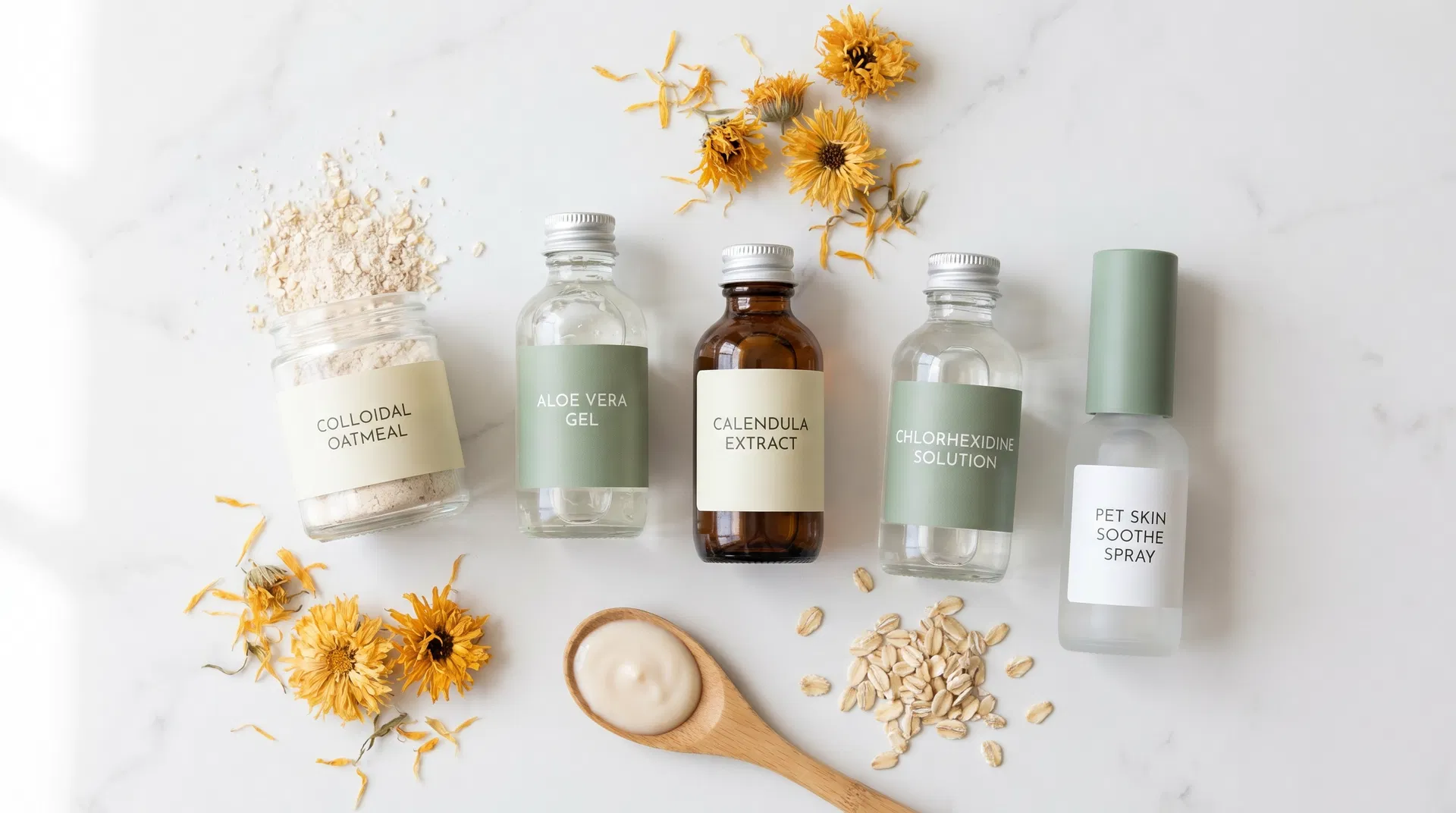
For a rinse-off product, the working discussion may cover cleansing level, rinse behavior, fragrance, visual appearance, and how the formula performs on the target coat type. For a leave-on product, the conversation often shifts to sprayability, residue, compatibility with brushing, and the consumer’s handling experience. Ingredient choices should support that defined job and be reviewed against the product’s target markets and label plan.
- Base and sensorial profile: Decide whether the product should feel light, creamy, foam-like, or wipe-based before choosing a promotional ingredient list.
- Fragrance policy: Specify fragrance-free, lightly scented, or a defined fragrance direction, then assess compatibility with the formula and packaging.
- Preservation and stability: Plan challenge testing, stability work, and packaging compatibility appropriate to the finished product and market requirements.
- Claims evidence: Keep every label or marketing statement tied to the actual formula, testing plan, and regulatory review rather than to a generic ingredient reputation.
Packaging is part of safe, consistent use
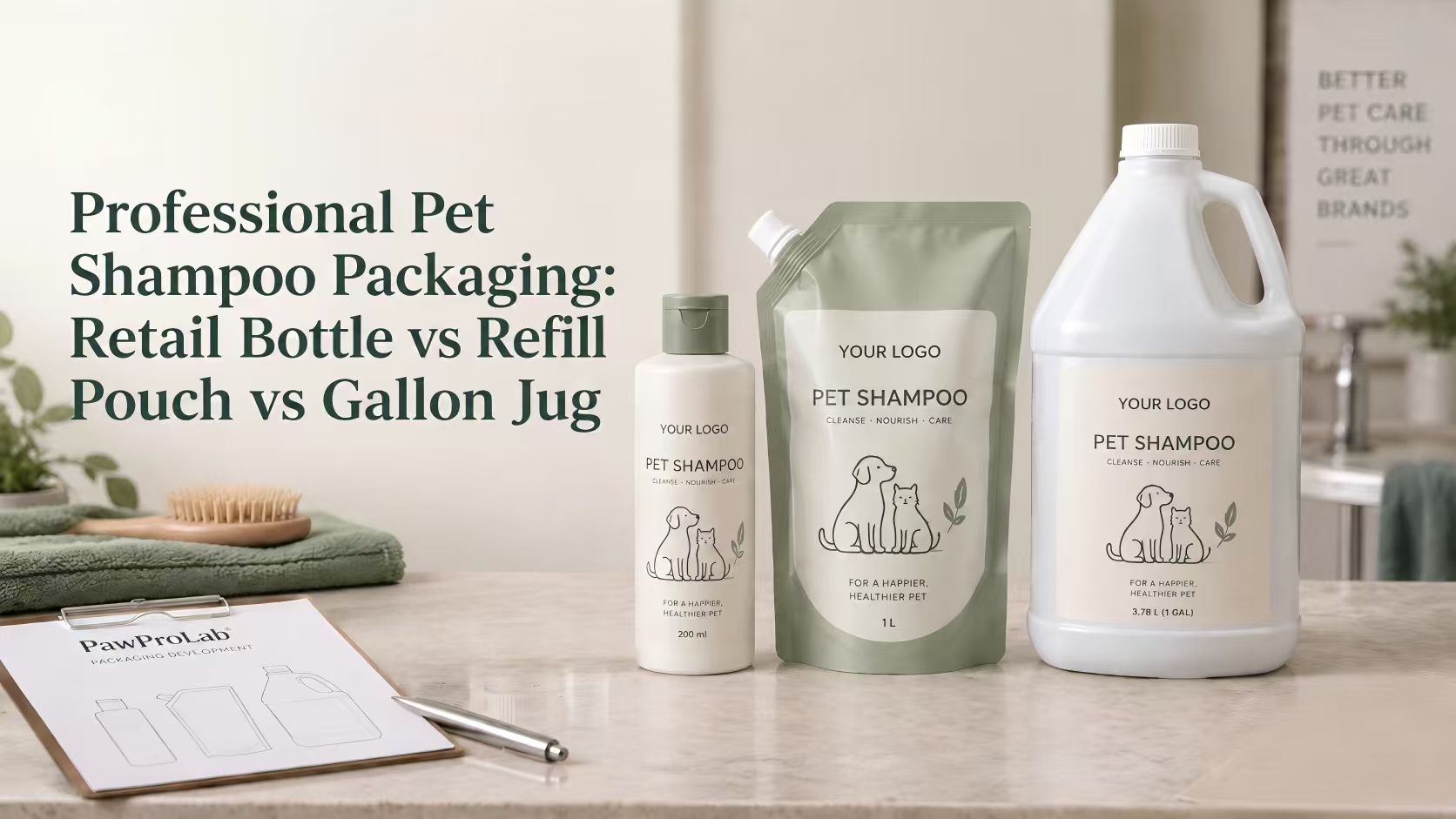
A practical package helps customers use the product as intended. Pumps, trigger sprayers, squeeze bottles, and wipe packs each create different expectations around dosage, storage, hygiene, and re-use. The packaging brief should cover closure compatibility, leak resistance, label space, batch traceability, and instructions that help users avoid contaminating the product during normal grooming.
Set a claims boundary before creative production
Words such as “cleanses,” “conditions,” “deodorizes,” or “supports a well-groomed coat” must still be truthful and supportable. More therapeutic wording requires a separate regulatory and substantiation review for each market. A responsible private-label launch avoids language that implies diagnosis, treatment, cure, or guaranteed prevention unless the brand has a verified basis and the appropriate legal path for that claim.
Clear escalation language also protects the customer experience. When a pet shows pain, severe irritation, bleeding, or another concerning change, a label and customer-support script should direct the owner to a veterinarian rather than encouraging repeated at-home product use.
Move from concept to an OEM-ready brief
The strongest development process connects the formula, packaging, claims, label, and customer instructions before sample approval. Talk with PawLab Pro about a product-specific development brief, or review the current Bath & Grooming collection for adjacent grooming formats.