Pet-care OEM insights
What Should Brands Consider When Developing Daily Eye Drops for Dogs and Cats?
What brands should consider when developing daily pet eye drops: intended use, formula, packaging, quality controls, and compliant claims.
For a pet brand, a daily eye-care SKU can look deceptively simple: a small bottle, a gentle formula, and a clear use routine. In practice, a product intended to be instilled in an animal’s eye sits at the intersection of formulation design, microbiological control, packaging engineering, labeling, and market-specific regulatory review. The right development question is not merely “Which ingredients should go into the bottle?” It is “What intended use, manufacturing controls, and proof package are appropriate for the market we plan to enter?”
This article gives brand owners and procurement teams a practical framework for evaluating a pet eye drops manufacturer or OEM/ODM partner. It focuses on daily hygiene and comfort-positioned eye-care concepts, not on diagnosing, treating, or curing eye disease. If a pet has pain, visible swelling, discharge, or a change in vision, the owner should be directed to a veterinarian rather than relying on a routine-care product.
TAKEAWAYS
- Define intended use before developing the formula: Whether a product is an external eye-area cleanser, an eye wash, or a drop applied directly to the eye changes its safety, quality, labeling, and regulatory requirements.
- Ocular use requires a higher quality bar: A product intended for ocular instillation needs a credible sterility-assurance and microbiological-control strategy; formula aesthetics alone are never enough.
- Dogs and cats should not be treated as identical users: Daily routine, pack size, application behavior, and owner-handling instructions need to reflect different household and pet-use patterns.
- Packaging is part of product safety: Bottle, tip, closure, preservative system, fill volume, and in-use contamination risk must be developed as one system.
- Claims must match the evidence and market pathway: A daily-care positioning should avoid disease-treatment claims unless the brand has pursued the applicable veterinary drug route.
1. Start With the Product Category, Not the Ingredient List
Before requesting samples, a brand should write a one-page intended-use brief. It should state where the product will be applied, how often it will be used, what the user is expected to observe, and which claims are proposed for the package and product page. This step prevents a common and expensive mistake: beginning with a consumer-friendly formula concept and later discovering that the claims, route of administration, or target market require a different quality and regulatory program.
For example, a private label dog eye wash positioned for routine removal of loose debris around the eye area is a different development project from a multi-dose bottle of drops intended to be instilled directly into the eye. The latter must be treated as an ocular product from the first technical discussion. A responsible supplier should never blur that distinction simply to make a launch appear faster.
A practical three-way product map
| Product concept | Typical use area | Development focus |
|---|---|---|
| External eye-area cleanser | Fur and skin around the eye | Gentle cleansing, wipe compatibility, low-residue performance, clear external-use instructions |
| Daily eye wash / rinse concept | Ocular-area use as defined by market requirements | Ocular safety assessment, microbial control, dispensing design, local regulatory review |
| Therapeutic ophthalmic product | Direct ocular use with disease-related claims | Veterinary-drug pathway, active-ingredient evidence, formal approvals and pharmacovigilance obligations |
For U.S. commercialization, a brand should not assume that a product is outside drug oversight merely because it is described as “daily,” “natural,” or “gentle.” Intended use and claims matter. FDA notes that eye drops bypass some natural defenses and that eye drops used in the eye must be sterile to reduce infection risk. [1] A launch plan should therefore include qualified regulatory review for each target market.
2. Build a Formula Brief Around Ocular Compatibility and In-Use Safety
When procurement teams ask for a sterile saline pet eye wash formula, they should request more than a short ingredient list. The formula brief needs to define the base system, pH target range, tonicity approach, preservation or single-use strategy, raw-material specifications, and the test methods used to confirm product quality. For direct ocular use, “mild” is a marketing description; it is not a technical validation plan.
Questions to put in the OEM formula brief
- Base system: Is the concept saline-led, buffered, or otherwise designed for the intended route of use? What is the rationale for each component?
- pH and tonicity: What target specification will be used, and how will it be checked across production, stability, and end-of-shelf-life samples?
- Ingredient suitability: Are all components appropriate for the intended ocular application and destination market? What supplier documentation supports that decision?
- Preservation strategy: If the product is multi-dose, how will the manufacturer manage microbial risk after opening? If it is preservative-free, will the pack format and in-use period support that claim safely?
- Appearance standards: What color, clarity, odor, particulate, and fill-volume specifications define an acceptable batch?
A preservative-free pet eye cleaner OEM program can be commercially attractive, particularly for brands that want a minimalist ingredient story. It is not, however, a shortcut. Preservative-free positioning usually shifts more responsibility to the container-closure system, fill environment, use instructions, and single-use or tightly controlled multi-dose format. The manufacturer should clearly explain what product configuration supports the claim and what data will be generated before launch.
3. Design for Dogs and Cats Without Making Unverified Medical Claims
Dogs and cats may share a household, but their grooming routines, owner handling, facial anatomy, and tolerance of application can differ. The product brief should therefore consider use experience—not only formula chemistry. A one-size-fits-all eye-care SKU may be operationally convenient, but a brand must decide whether it delivers the right applicator, dose control, and instruction set for its chosen audience.
Daily-use design questions for each pet segment
- Dog-focused concepts: Consider bottle grip, one-handed dispensing, practical fill size, and instructions suitable for active households and routine grooming workflows.
- Cat-focused concepts: Prioritize calm, low-drip dispensing and concise use directions. The product experience should minimize unnecessary handling time.
- Multi-pet positioning: Validate that the formula, application method, and on-pack language remain appropriate for both target species in every intended market.
- Claim discipline: Keep messaging focused on routine eye-area hygiene or daily-care support where appropriate; do not imply that the product treats infection, conjunctivitis, injury, or other diseases without the required regulatory basis.
4. Treat Packaging as a Functional Part of the Formula
Pet ophthalmic dropper bottle packaging is not a final-stage branding decision. The container, dropper tip, closure torque, resin selection, fill volume, tamper evidence, and label instructions all affect how the formula performs and how contamination risks are managed during use. A competent contract manufacturing pet eye drops partner should test the selected formula in its actual market-ready pack, not only in a generic laboratory container.
Packaging decisions to review before approving samples
| Decision area | What a brand should confirm | Why it matters |
|---|---|---|
| Dropper geometry | Drop consistency, tip protection, and ease of aiming without touching the eye or fur | Supports more controlled use and clearer handling instructions |
| Container-closure system | Compatibility with formula, leak resistance, and performance throughout shelf life | Reduces package-related quality failures after transport and opening |
| Single-use vs. multi-dose | Opening period, preservation approach, pack economics, and user convenience | Determines the overall in-use risk-control strategy |
| Label and carton | Route of use, storage, caution statements, lot coding, expiry, and destination-market language | Helps buyers, retailers, and consumers use and trace the product correctly |
Brands should also ask for shipping and stability review in the final pack. Eye-care products can be sensitive to temperature exposure, seal integrity, and particulate contamination. FDA’s recent eye-drop safety communications underscore why traceability, complaint handling, and microbiological control should be commercial priorities rather than back-office requirements. [2]
5. Evaluate the Manufacturing Partner’s Quality System, Not Just the Sample
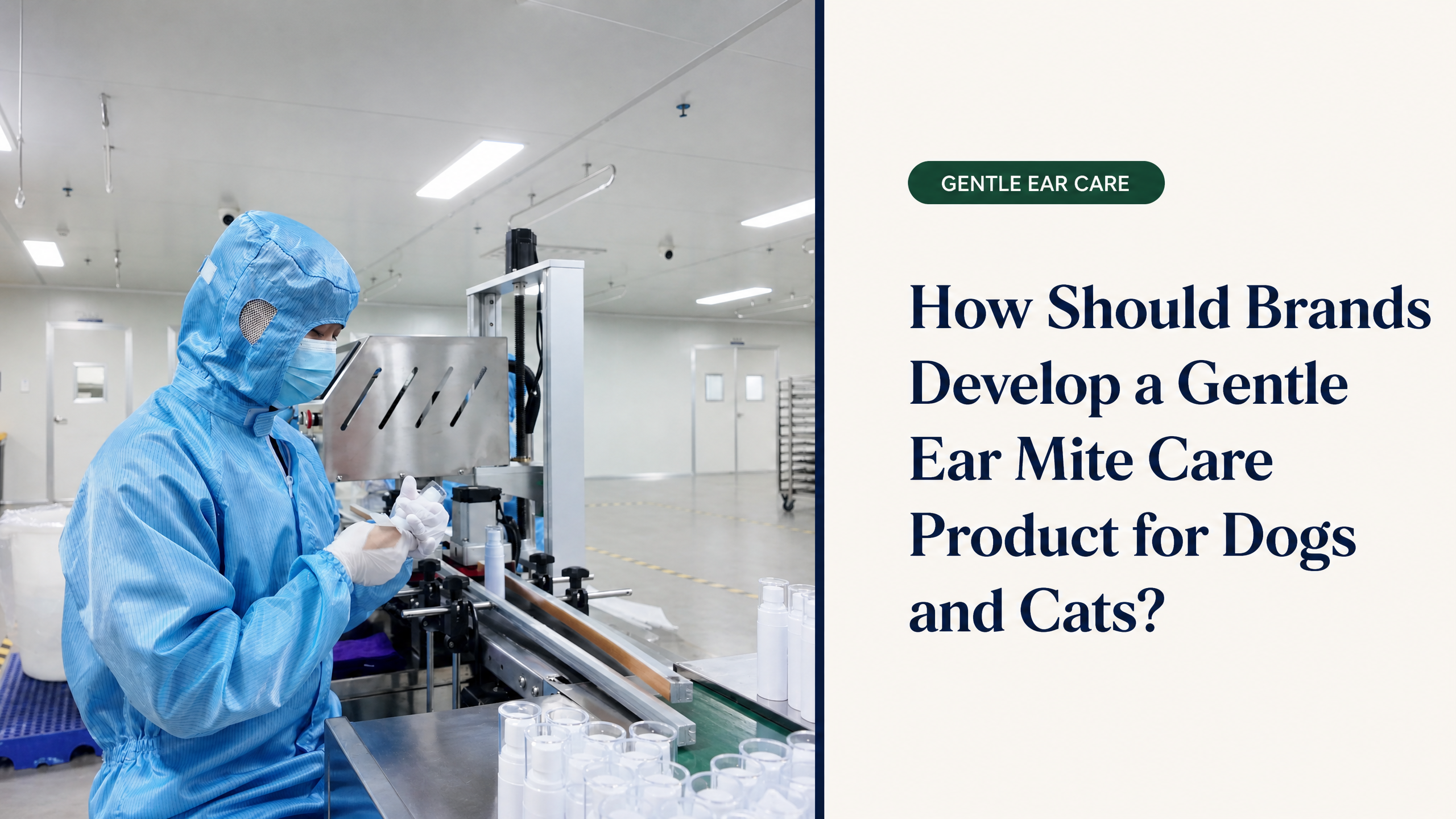
A visually clean sample is only the beginning. When comparing a pet eye drops manufacturer, purchasing teams should assess whether the supplier can explain its contamination-control approach, batch documentation, raw-material traceability, test specifications, deviation handling, and finished-goods release process. An OEM partner should be able to distinguish between what has been demonstrated in a laboratory trial and what has been validated for commercial production.
Supplier questions that reveal operational readiness
- Facility and process: Which controls apply to the intended product route, and who is responsible for batch release?
- Microbiological strategy: Which tests are performed on raw materials, bulk, filled product, and stability samples? How are out-of-specification results investigated?
- Documentation: Can the supplier provide a specification sheet, certificate of analysis format, batch record outline, and change-control process?
- Packaging qualification: How are compatibility, leakage, transport, and in-use performance assessed in the chosen bottle?
- Market readiness: What regulatory information can the supplier provide, and where must the brand obtain market-specific counsel or registrations?
For U.S. animal-drug concepts, FDA maintains the Green Book as a public resource for approved animal drug products. [3] This does not replace regulatory counsel, but it illustrates why brands should verify their planned claims and pathway before committing to a therapeutic eye-care proposition.
6. Plan the Product Line, Not Only the First SKU
A daily eye-care launch can support a broader private-label grooming and wellness architecture. The strongest programs set product boundaries early: which SKU is a routine external cleanser, which requires a more controlled eye-wash development path, and which claims or formats are deliberately excluded until the brand has the evidence and regulatory support to pursue them. This approach reduces line overlap and gives retailers a clearer story.
For example, a brand may begin with a carefully positioned routine eye-area cleanser and a companion grooming format, then evaluate a direct-use ocular concept only after completing the required technical and regulatory work. The product roadmap should be driven by manufacturing capability, evidence, and safe use—not by a desire to make broad treatment claims.
What Brands Should Confirm Before Moving to Samples
- Intended use and market: Document exactly where the product is used, what it is allowed to say, and which countries will receive it.
- Formula guardrails: Confirm the base system, appearance specifications, preservation or single-use strategy, and ingredient-screening requirements.
- Packaging brief: Select a testable bottle-and-closure concept before approving an engineering sample.
- Quality evidence: Define the sample, stability, microbiological, compatibility, and batch-release information required for each project stage.
- Commercial execution: Align MOQ, lead time, artwork workflow, destination-market labeling, and post-market complaint handling before production scheduling.
Conclusion
Developing daily eye drops for dogs and cats is not a routine “add water and label” private-label project. It requires brands to connect product positioning, ocular-use safety expectations, formula evidence, packaging performance, and quality-system transparency. The right OEM/ODM partner will help the brand ask the difficult questions early, document the answers, and avoid claims or shortcuts that create future risk.
If you are evaluating a private label dog eye wash or an eye-care manufacturing concept for your next collection, contact PawLab Pro to discuss your target market, intended use, packaging direction, and sample-review requirements before moving into development.
References
- U.S. Food and Drug Administration — What You Should Know about Eye Drops.
- U.S. Food and Drug Administration, Center for Veterinary Medicine — FDA Reminds Veterinarians and Pet Owners about Eye Drop Recalls.
- U.S. Food and Drug Administration — Approved Animal Drug Products (Green Book).