Pet-care OEM insights
Pet Care Packaging Validation: A Pre-Launch OEM Checklist
Before scaling a pet grooming product, validate the formula, bottle, pump, label and carton as one system with this practical OEM pre-launch checklist.
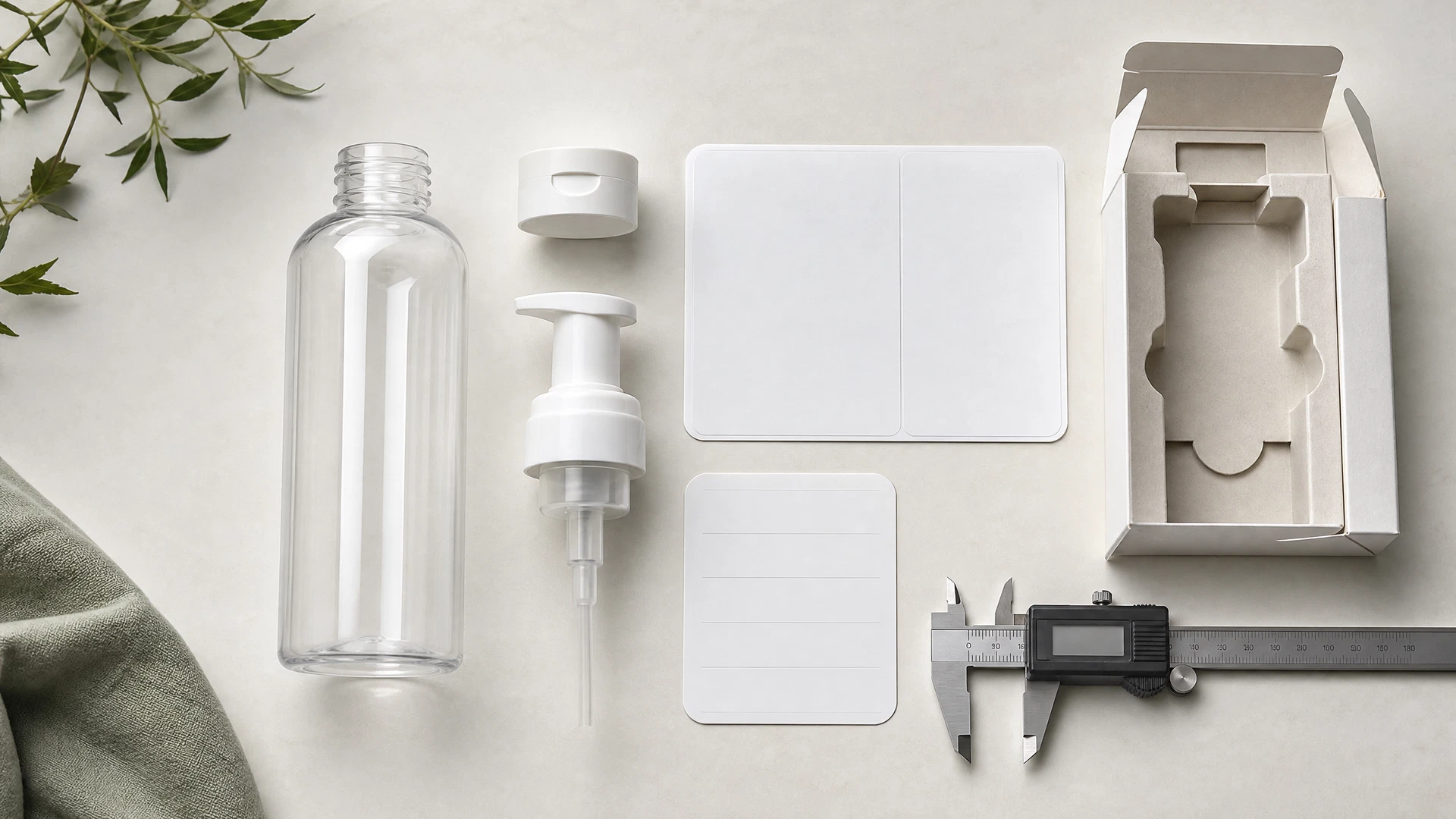
For a private-label pet-care product, the bottle is not a finishing touch. It is part of the product system. A shampoo that separates after storage, a foam pump that loses performance, a cap that seeps in transit, or a label that wrinkles around a curved bottle can turn a promising formula into a costly launch problem.
That is why a strong OEM brief does not end with “250 ml bottle, white pump, matte label.” It defines how the formula, pack, closure, label, carton, transport condition, and customer use routine must work together. Packaging compatibility work is intended to surface foreseeable problems before a production run is committed. In cosmetic compatibility work, laboratories commonly inspect changes in appearance, colour, odour, package integrity, dispensing performance, and product loss under controlled storage; the exact protocol should always be tailored to the product and market rather than copied as a universal rule.1
This guide is for pet-care brand owners, distributors, and product teams planning shampoo, conditioner, waterless foam, wipes, sprays, balms, or adjacent grooming formats. It is a product-development checklist, not a substitute for market-specific regulatory, safety, or quality advice.
The decision standard is simple: do not approve a packaging concept because it photographs well. Approve it when the final formula and final pack have been evaluated together against the way the product will actually be filled, shipped, stored, sold, and used.
What is pet-care packaging validation?
Pet-care packaging validation is a pre-launch review of whether one defined formula, primary container, closure, label, carton, and intended handling route work together. It is not a generic “bottle test.” The practical purpose is to make an evidence-based launch decision using production-representative components and the real conditions the finished SKU is expected to encounter.
For an OEM brief, the output should be clear: identify the exact components reviewed, record the observations and acceptance criteria, assign an owner for unresolved findings, and state which changes would trigger a focused re-check. This makes the discussion useful to a brand, its factory, distributor, and quality team without overstating what any single test can prove.
Start with the product’s real use conditions
The useful question is not “Which bottle do we like?” It is “What will this product experience between filling and the last consumer use?” A rinse-off shampoo may spend time upright in a humid bathroom. A waterless foam cleanser may be carried in a bag, stored on its side, and repeatedly actuated. A wipe pack may be opened and resealed many times. A balm may be exposed to elevated temperatures during transit and then handled with wet hands.
Write those conditions into the brief before choosing a bottle. The process should capture the product format, viscosity or flow expectation, intended dispensing action, target fill volume, expected shipping route, seasonal temperature exposure, label language markets, and outer-carton requirements. PawLab Pro’s stated workflow links formula development, production and filling, quality control, packaging and labelling, and export delivery; the packaging decision should therefore be reviewed across those stages rather than handed off at the end.2
| Brief question | Why it changes the packaging decision | Example approval criterion |
|---|---|---|
| How is the product dispensed? | A flip-top, disc cap, trigger and foaming pump create different use experiences and failure points. | The chosen closure can be opened, closed and used comfortably with the expected amount of product on the user’s hands. |
| What is the formula’s flow behaviour? | Thin liquids, gels, creams and foams place different demands on dip tubes, valves and orifices. | The pack delivers the intended dose consistently without excessive priming, splashing or retained product. |
| Where will it travel and be stored? | Heat, cold, vibration and orientation can expose leaks, deformation, separation and label issues. | The finished pack remains fit for sale after the agreed storage and transit simulations. |
| Which claims and instructions must appear? | Curved surfaces, small labels and multilingual panels can create legibility or barcode problems. | Required copy, lot information and artwork remain legible and correctly positioned on the final pack. |
Treat formula and primary pack as one decision
Formula approval and bottle approval should not be separated. The final formula can interact with a package in ways that are not visible in a supplier catalogue. The product may change in appearance, colour, odour, texture, or dispensing behaviour; the pack may show stress, deformation, leakage, or weakened function. ADSL Laboratories describes compatibility assessments that look at these kinds of formula-and-package changes under controlled conditions.1
For a pet shampoo or conditioner, the practical starting point is a final or near-final formula in the intended bottle, closure, and label configuration. For a waterless foam format, include the intended foaming mechanism—not merely a substitute cap. For a spray, use the intended trigger or fine-mist actuator. If a brand plans a premium outer carton, test the production-representative carton as well; a bottle can pass a bench check yet still suffer scuffing, label abrasion, or movement inside the final shipper.
The test plan does not need to be complicated to be disciplined. It needs named samples, agreed observation points, assigned owners, and a decision rule for each finding. Record the exact packaging vendor, material specification when available, closure reference, actuator configuration, label substrate, adhesive, artwork revision, fill volume, and batch identifier. That record makes a later investigation possible if a component changes.
Build a failure-mode matrix before you order inventory
The fastest way to make a packaging discussion operational is to turn preferences into potential failures and checks. The matrix below is a commercial development tool. It should be adapted by the OEM, component suppliers, and the brand’s quality or regulatory team for the actual product and destination market.
| System area | Question to resolve | Practical pre-launch check |
|---|---|---|
| Bottle or jar | Does the container remain stable with the intended formula and fill level? | Inspect final filled samples over agreed storage conditions for product and pack changes. |
| Cap, pump or trigger | Does the closure seal and dispense as intended? | Check priming, actuation, lock/unlock action, dispensing consistency, and leakage in relevant orientations. |
| Label | Does the label stay readable and attached? | Review adhesion, seam placement, wrinkle risk, scuffing, barcode scan area, and variable-data placement on final bottles. |
| Carton and shipper | Does the pack arrive in saleable condition? | Review fit, movement, closure integrity, print abrasion, and damage risk using the intended pack-out. |
| Change control | Can the team detect a meaningful component change? | Keep approved component samples and require written review before substitutions. |
Pay special attention to the dispensing system
Most avoidable customer complaints are not about the silhouette of a bottle. They are about what happens when someone tries to use it. A pump that produces an inconsistent dose, a trigger that dribbles after use, or a foaming head that does not generate the intended texture can undermine the experience even if the formula itself is sound.
For each dispensing format, define what “working” means in observable terms. A standard pump may need to dispense a consistent amount without sudden spurting. A foaming pump may need to generate the agreed texture after repeated use. A flip-top cap may need to be manageable in a wet-grooming context while remaining resistant to accidental opening in transit. The correct criteria are product-specific; an OEM should document them against the actual format rather than borrowing a result from an unrelated bottle.
If the brand offers both a small retail size and a professional-size refill, test both configurations. A formula that works well through a 250 ml pump may behave differently through a larger closure or a different dip-tube geometry. That is not a failure of the concept—it is exactly what pre-launch validation is meant to reveal.
Do not leave labels and traceability until the last week
Packaging validation also includes information design. The final label needs enough usable space for brand copy, usage directions, ingredient information where relevant, warnings, origin or importer information where required, barcodes, lot coding, and market-specific language. A visually strong mock-up does not prove that all of this will fit on the production bottle.
For each launch SKU, approve artwork on the actual pack shape. Confirm where batch or date coding will sit, whether it remains readable after normal handling, and whether the label seam or curvature reduces legibility. The same discipline should apply to the outer carton and shipper. If a distributor or retailer has a carton-label requirement, include it in the brief from the start instead of treating it as a post-production add-on.
Link packaging validation to the supply decision
A packaging system is not qualified once and forever. It is qualified for a defined formula, component set, artwork revision, fill process, and market plan. When any of those inputs change, decide whether a focused re-check is needed. A change in bottle supplier, resin, actuator, label material, fragrance profile, preservative system, fill volume, or shipping route can be commercially meaningful even if it appears minor in isolation.
This is especially important for brands scaling from samples to a wider rollout. Retain approved reference samples and specification records. Ask the OEM what will happen if a component must be substituted. A clear written change-control step is less glamorous than a launch announcement, but it protects the consistency that distributors and repeat customers expect.
A practical pre-launch gate for brand teams
Before issuing a production purchase order, hold a short cross-functional review. The goal is not to create paperwork for its own sake; it is to establish that there is one agreed version of the product system.
| Approval gate | Evidence the brand should request | Red flag that should pause approval |
|---|---|---|
| Formula–pack match | Identified final formula and final primary-pack samples | The formula was assessed only in a generic or substitute container. |
| Dispensing performance | Agreed product-specific criteria and observations | Pump, trigger, cap, or foam head is selected solely from a catalogue image. |
| Label and coding | Final artwork applied to the real pack with code area confirmed | The label template was approved only on a flat digital file. |
| Pack-out and transport | Defined carton configuration and handling review | Carton dimensions, dividers, or orientation are undecided after component ordering. |
| Controlled changes | Named components and a process for substitutions | The team cannot identify what requires review if a supplier changes a component. |
Turn the checklist into a better OEM conversation
The best brief does not demand a generic promise of “premium packaging.” It asks focused questions: Which final bottle and closure will be evaluated with the formula? What dispensing standard is being used? How will label adhesion and coding be checked? What is the final pack-out? Which changes trigger another review? These questions position a brand as a prepared partner and make quotes easier to compare on substance rather than presentation alone.
PawLab Pro presents bath and grooming formats for brand development through its product range. If your team is defining a new pet-care SKU, use the questions in this article to prepare a product brief, then discuss the formula, dispensing format, packaging, and target-market requirements with the PawLab Pro team. A factory discussion is most productive when the brand brings both a commercial concept and a clear definition of the product system it needs to validate.
Pet-care packaging validation FAQ
Is a packaging prototype enough for launch approval?
Not by itself. A prototype is useful for evaluating a concept, but launch approval should be based on the final or near-final formula in the intended container, closure, label, and pack-out configuration. A substitute bottle or cap can hide a dispensing, leakage, label, or transit issue that only appears in the production-representative system.
When should a brand repeat a packaging review?
Review the change when an input that can alter the product system changes. Examples include the bottle supplier, closure or actuator, label material or artwork revision, fill volume, formula, carton configuration, or shipping route. The appropriate scope is product-specific, so the OEM and brand should record why a focused re-check is or is not needed.
What evidence should a pet-care brand ask for before a production order?
Ask for the identified final formula and component set, the agreed dispensing and pack-out checks, observations from the review, the approved artwork and coding area, and a named change-control process. Those records make it possible to compare a quote or later substitution against the version that was actually reviewed.
Can a packaging review eliminate all market risk?
No. A defined review reduces avoidable uncertainty; it does not replace market-specific regulatory, safety, quality, logistics, or customer-use decisions. The value is that a team can identify foreseeable issues earlier, document the chosen system, and decide what additional work is appropriate before launch.