Pet-care OEM insights
Tear-Free, Hypoallergenic and pH-Balanced Pet Shampoo: What Evidence Should Brands Request?
Learn which finished-product evidence brands should request for tear-free, hypoallergenic and pH-balanced pet shampoo claims before approving production.
Terms such as tear free pet shampoo, hypoallergenic dog shampoo and pH balanced pet shampoo are often placed into a sourcing brief before the brand has agreed what evidence the finished product must carry. For an OEM or private-label launch, that sequence is backwards. A mild raw material, a fragrance-free direction or one fresh-batch pH measurement can inform development, but none is automatically a finished-product claim file.
This article is for brand owners, distributors and product teams developing a non-medicated rinse-off grooming product. It explains what to request before approving the wording, formula version and pack. It does not prescribe a universal formula target, replace market-specific regulatory review, or make treatment, allergy-prevention, veterinary, absolute-safety or guaranteed non-irritation claims.
TAKEAWAYS
- Ask for finished-product evidence linked to a specific formula version, pack and intended-use direction—not only ingredient marketing sheets.
- A “tear-free” direction needs a written use context and an evidence plan; mild surfactants alone do not establish an every-situation non-irritation promise.
- “Hypoallergenic” should be handled as a tightly defined product-design and claims-review decision, not as a guarantee that no animal will react.
- “pH-balanced” needs a method, target range, stability checkpoints and change control; one pH result at sample release is only a starting observation.
- Approve a claim only after formula, evidence, label language, packaging and target-market review describe the same finished product.
1. Why Claim Language Needs a Finished-Product Evidence File
When a supplier says a surfactant is mild, that statement may be relevant to formulation design. When a brand says the finished shampoo is tear-free, hypoallergenic or pH-balanced, the buyer should ask a different set of questions: Which formula version was assessed? What use context was considered? Which method, acceptance criteria and storage checkpoints apply? Does the wording on the label say no more than the evidence can support?
For U.S.-facing projects, FDA’s guidance describes grooming aids as products intended solely to cleanse or beautify animals. The product position, directions and claims should remain consistent with that scope. [1] The FTC’s substantiation policy states that advertisers should have a reasonable basis for objective express and implied claims before they are disseminated. [2] In practical sourcing terms, a product brief should become a claim dossier before the launch copy is approved.
| Claim Direction | Common Sourcing Shortcut | What a Brand Should Request Instead | What Not to Say Without Support |
|---|---|---|---|
| Tear-free | “We use gentle surfactants.” | Intended-use definition, finished-formula review, test rationale appropriate to the market, use directions and approved claim wording | “Will never sting” or “safe in every animal’s eyes” |
| Hypoallergenic | “There is no fragrance.” | Formula/INCI version, fragrance and allergen policy, supplier documentation, finished-product tolerance evidence where appropriate and label review | “Causes no allergies” or “zero reaction risk” |
| pH-balanced | “The sample measured pH 6.5.” | Method, sample preparation, acceptable band, batch records, stability time points and package-compatibility review | “The pH remains perfect forever” |
APPA notes that claims for pet products must be substantiated as truthful and that retailer safety or performance expectations can be more demanding than baseline requirements. [3] That is why an effective pet shampoo claim testing plan is a commercial approval tool as well as a technical one.
2. Tear-Free Is a Defined Use-Context Claim, Not a Surfactant List
A claim brief should first state what “tear-free” is intended to communicate. Is the product a rinse-off dog shampoo used around the face according to written directions? Is the wording intended for a puppy-focused range? Is a brand asking for a phrase that implies eye contact tolerance? These scenarios create different buyer expectations and should not be collapsed into one unqualified badge.
Using a gentler surfactant system may be a reasonable development choice, but it does not prove that the finished formula, including preservative system, fragrance direction, color, pH, concentration and use pattern, meets a specific tear-free claim. The formulator and brand should agree a written assessment route suitable for the target market and species scope. Where qualified laboratory or regulatory input is needed, it should be obtained before a claim becomes label copy.
| Tear-Free Evidence Gate | Buyer Question | Document or Observation to Request |
|---|---|---|
| Use scope | Who is the product for and how should it be used around the face? | Target animal scope, rinse-off directions and label-use draft |
| Formula identity | Is the evidence linked to the exact finished formula being approved? | Formula version, ingredient list and sample identification code |
| Assessment rationale | What evidence is appropriate for the proposed wording and market? | Written rationale from the qualified development, testing or regulatory reviewer |
| Pack and directions | Could the closure, dose or directions change exposure? | Finished-pack review, dispensing observation and final directions |
| Claim approval | Does the public wording match the actual evidence? | Claim matrix showing approved, revised and excluded language |
For many brand programs, the more precise direction is not an absolute “no tears” promise. It may be a modest finished-product positioning that is released only after the final formula, evidence and market-language review. This is especially relevant when a buyer is building a puppy shampoo line: age-led positioning should not become a shortcut for medical or universal-safety wording.
3. Hypoallergenic Means Define the Risk-Reduction Design—Then Review the Claim
“Hypoallergenic” is frequently treated as a formula ingredient filter. A brand may ask for no added fragrance, no added color or a simpler ingredient direction. Those are useful instructions, but they are not evidence that no animal can experience an adverse response. A finished product can only be responsibly described after the brand has defined the claim, the target animal scope, the formula version and the appropriate support for that claim.
For a sensitive skin dog shampoo OEM project, request a formula map that distinguishes decision inputs from launch evidence. The map should show which materials were excluded by brief, which supplier documents are available, which final-formula checks are planned, what conditions trigger a reformulation or relabeling review, and which words remain prohibited.
| Review Layer | Evidence Purpose | Brand Approval Question |
|---|---|---|
| Formula brief | Records product-design choices such as fragrance policy and ingredient restrictions | What has actually been excluded, and why? |
| Supplier documentation | Links materials to the relevant technical and safety information | Does the record cover the materials in this exact formula version? |
| Finished-formula review | Moves the discussion from raw materials to the final mixture | What assessment is appropriate before the proposed claim is released? |
| Stability and pack review | Checks that storage and packaging do not change the approved product experience or evidence context | Do the claim, formula and pack remain linked after agreed checkpoints? |
| Copy gate | Keeps market-facing language within the approved evidence range | Does the wording avoid treatment, allergy-prevention and zero-risk implications? |
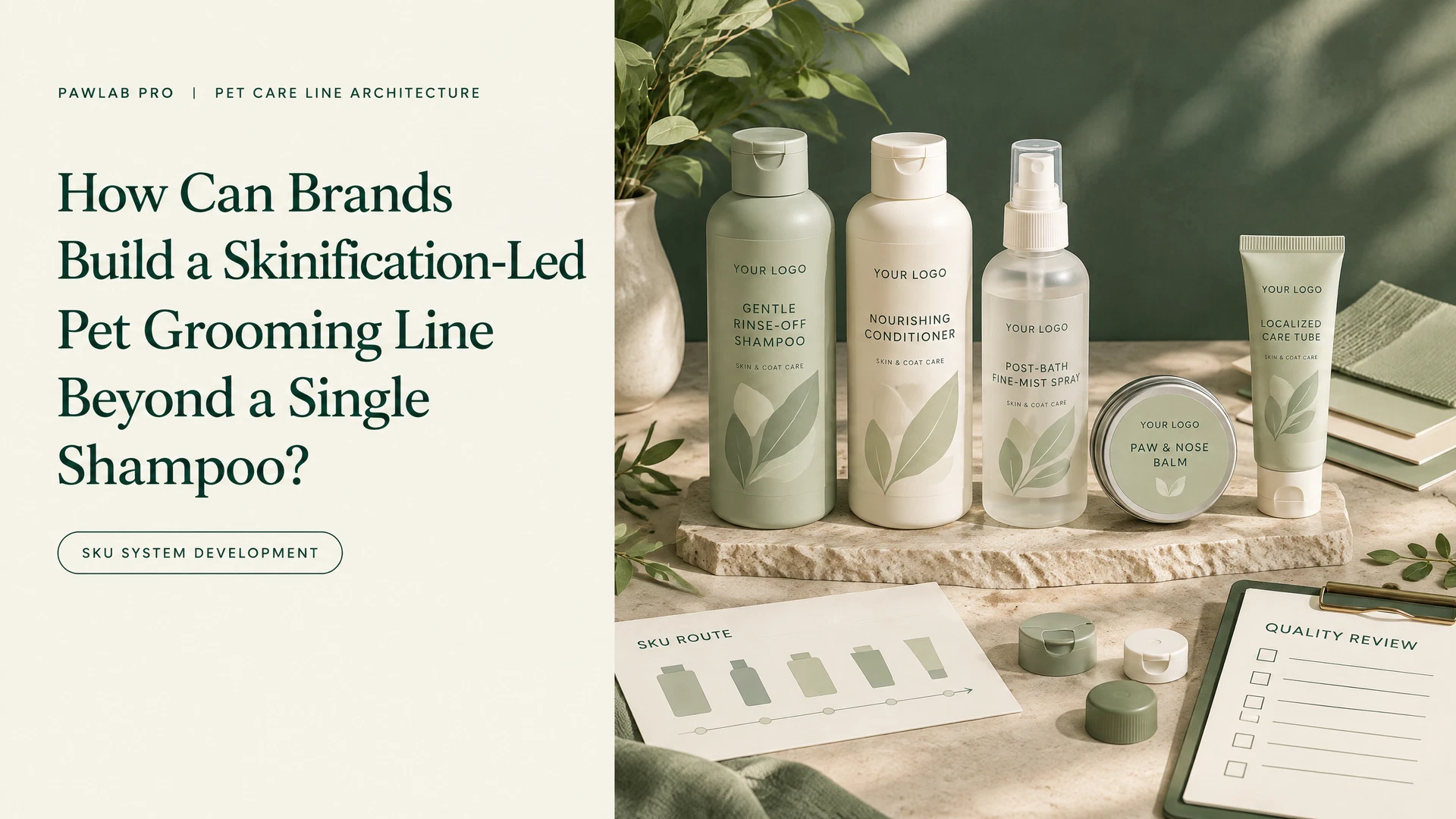
A fragrance-free brief may be suitable for one range, while a low-fragrance direction may be appropriate for another. The product architecture should explain this difference rather than assign “hypoallergenic” to every SKU. Our skinification-led pet grooming line guide shows how cleaner, conditioner and post-bath products need distinct roles instead of repetitive claims.
4. pH-Balanced Requires a Stability Story, Not One Fresh-Sample Number
A pH balanced pet shampoo claim should begin with a defined method. The brand and manufacturer need to agree whether the sample is measured neat or diluted, which water and temperature conditions apply where relevant, which calibrated instrument is used, what range is acceptable, and when the result must be repeated. Without those details, two pH figures may not be comparable.
The more important point is time. A fresh laboratory sample can satisfy an initial target while the product still requires agreed stability observations and finished-package review. The purpose is not to claim that pH alone determines every pet outcome; it is to demonstrate that the approved formula is being evaluated against its own written method and acceptance range as the project moves toward production.
| pH Evidence Checkpoint | What Must Be Recorded | Decision It Supports |
|---|---|---|
| Initial approved sample | Formula version, method, sample temperature, result and acceptable range | Whether the sample is ready to enter the evidence plan |
| Agreed storage checkpoints | Storage condition, duration, equilibration approach, repeat result and appearance notes | Whether the formula remains within the approved project specification |
| Finished-pack review | Pack code, closure, fill format, compatibility observations and sample linkage | Whether the formula-and-pack system can move forward together |
| Batch-release record | Lot number, method identifier, target band, result and disposition | Whether a batch meets the written release specification |
| Change control | Changed material, fragrance, color, preservative, supplier, process or packaging element | Whether retesting and claims review must be repeated |
For the complete mass-production parameter framework, link the claim file to our pet shampoo formula testing guide. That article explains how pH, viscosity, foam and rinseability are recorded as a coordinated production specification. This article adds the question commercial teams often miss: what evidence is needed before the resulting pH language becomes a public claim?
5. Build One Claim Dossier Across Formula, Package and Label
The best evidence file is not a collection of PDFs without a decision owner. It is a claim dossier that lets a buyer trace every public phrase back to the finished formula, approved pack, sample record and target-market copy. The dossier should identify whether a claim is approved, conditional, revised or excluded.
| Dossier Section | Minimum Contents | Commercial Benefit |
|---|---|---|
| Claim brief | Exact proposed wording, intended market, animal scope and use context | Prevents a vague marketing request from turning into unreviewable copy |
| Formula identity | Formula code, version, final INCI route and material-change history | Connects the evidence to the product actually being sold |
| Evidence plan | Methods or review rationale, acceptance criteria, limitations and reviewers | Makes testing expectations visible before packaging artwork is finalized |
| Stability and packaging | Time points, appearance, pH where relevant, dispensing and compatibility observations | Stops a formula-only approval from ignoring the finished commercial unit |
| Copy matrix | Approved wording, prohibited wording and claim-qualified directions | Gives e-commerce, retail and distributor teams one controlled language source |
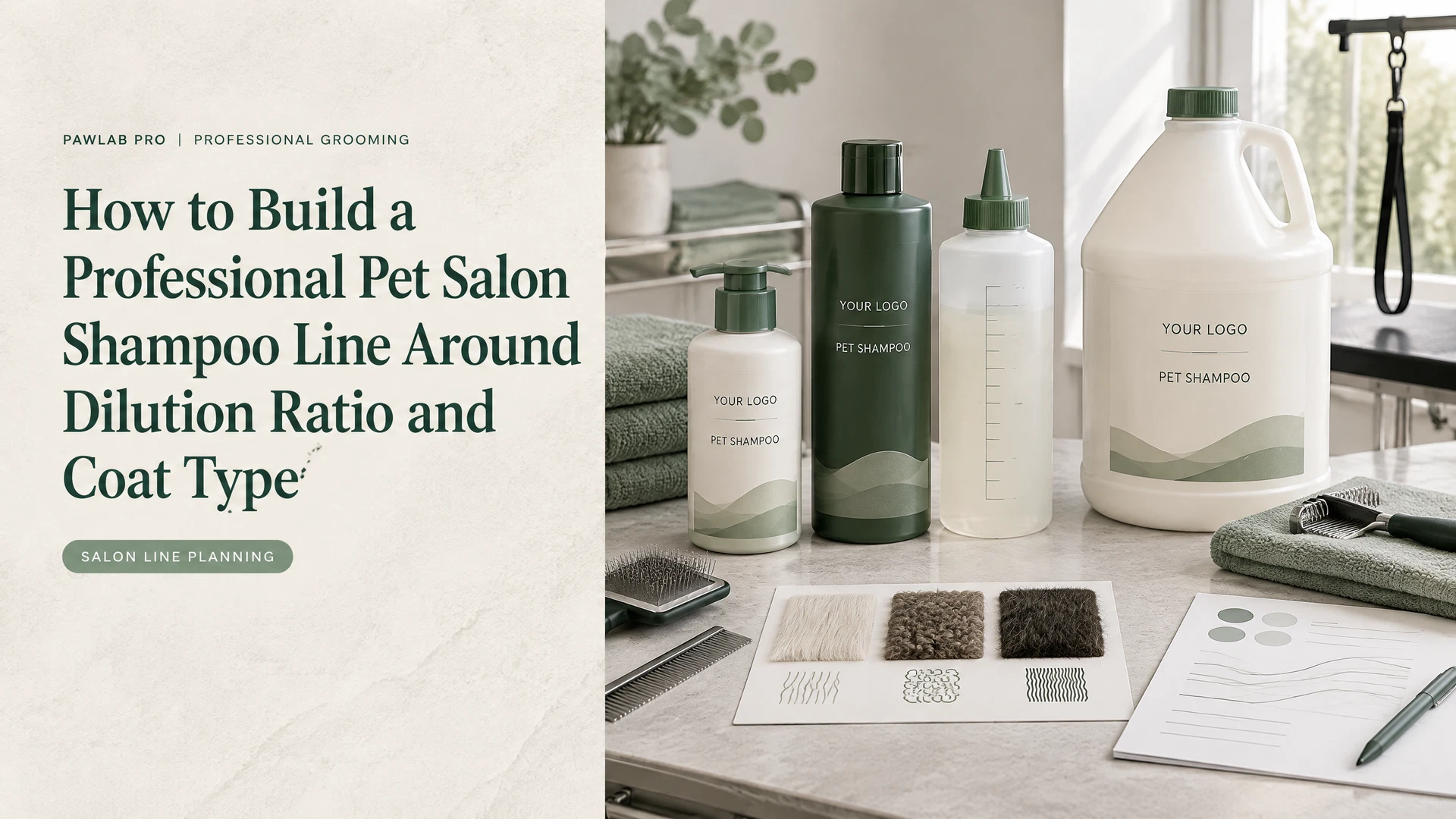
Do not treat an evidence file as a substitute for market advice. It is a structured way to make a sample-review conversation more precise. Brands choosing between retail and professional formats can pair this process with our ready-to-use versus concentrated pet shampoo guide, since dilution directions, dispensing and channel use can affect the wording and use context that the file must cover. A formula-specific sample review can also be scoped around the development brief for Professional Volumizing Pet Shampoo; the presence of a product direction does not replace claim evidence for the final customized formula.
6. A Buyer Approval Checklist Before Claim Copy Goes Live
- Name the claim exactly. Write the consumer-facing phrase and the intended market before the lab work or artwork begins.
- Freeze the formula version. Link samples, evidence and artwork to one traceable finished-formula identifier.
- Set the assessment route. Ask the qualified technical or regulatory reviewer what evidence is appropriate for the specific claim and product use.
- Include the package. Review the final bottle, cap or pump, dose and directions alongside the formula.
- Include stability. Agree which time points, storage conditions and repeat observations matter for the claim.
- Approve copy last. Release only the language the final dossier supports; change the wording if the evidence changes.
This article is not a medical, veterinary, eye-safety, allergy-prevention, universal suitability, no-reaction, treatment or guaranteed-performance claim. It is a procurement framework for requesting traceable finished-product evidence before public grooming-product wording is approved.
FAQ: Pet Shampoo Claim Evidence
Does fragrance-free automatically mean hypoallergenic dog shampoo?
No. A fragrance-free decision may be part of a product-design brief, but it does not prove that every animal will have no reaction. Ask for the exact formula version, ingredient policy, appropriate finished-product assessment route, stability/pack review and copy approval before using a hypoallergenic claim.
Can a supplier call a shampoo tear-free because it uses mild surfactants?
Not responsibly without defining the intended use and evidence for the finished formula. Mild materials may guide development, but the brand should request a written claim rationale, formula-specific documentation, final directions and market-language review before releasing tear-free wording.
What proves a pH balanced pet shampoo claim?
A fresh pH number alone is not enough. Request a documented method, acceptable range, formula version, storage checkpoints, repeat measurements, package review and batch/change-control records. The phrase should be limited to what that completed evidence supports.
Should brands create a separate sensitive skin dog shampoo OEM SKU?
Only if the product role, formula policy, target users and claim dossier are meaningfully different from the base shampoo. A separate SKU should not be created merely to repeat “gentle” wording. Compare the claim, use context and evidence pathway before adding the line.
What is the first item to request from a pet shampoo manufacturer?
Start with a one-page claim brief: exact words, target market, intended animal scope, product use, package format and evidence expected before release. That brief lets the factory, laboratory and regulatory reviewer scope the sample and documentation plan around the same commercial decision.
Request a Claim-Review Sample Brief Before You Print the Label
The useful question for a brand is not “Can this ingredient sound gentle?” It is “What does the finished shampoo evidence file allow us to say?” PawLab Pro can structure a sample-development brief around formula version, fragrance direction, pack format, intended market, claim wording and approval checkpoints. Contact PawLab Pro to request a claim-review sample brief for your next shampoo line.
References
- U.S. Food and Drug Administration. CPG Sec. 653.100 Animal Grooming Aids.
- Federal Trade Commission. Policy Statement Regarding Advertising Substantiation.
- American Pet Products Association. Before Entering the Pet Products Industry.